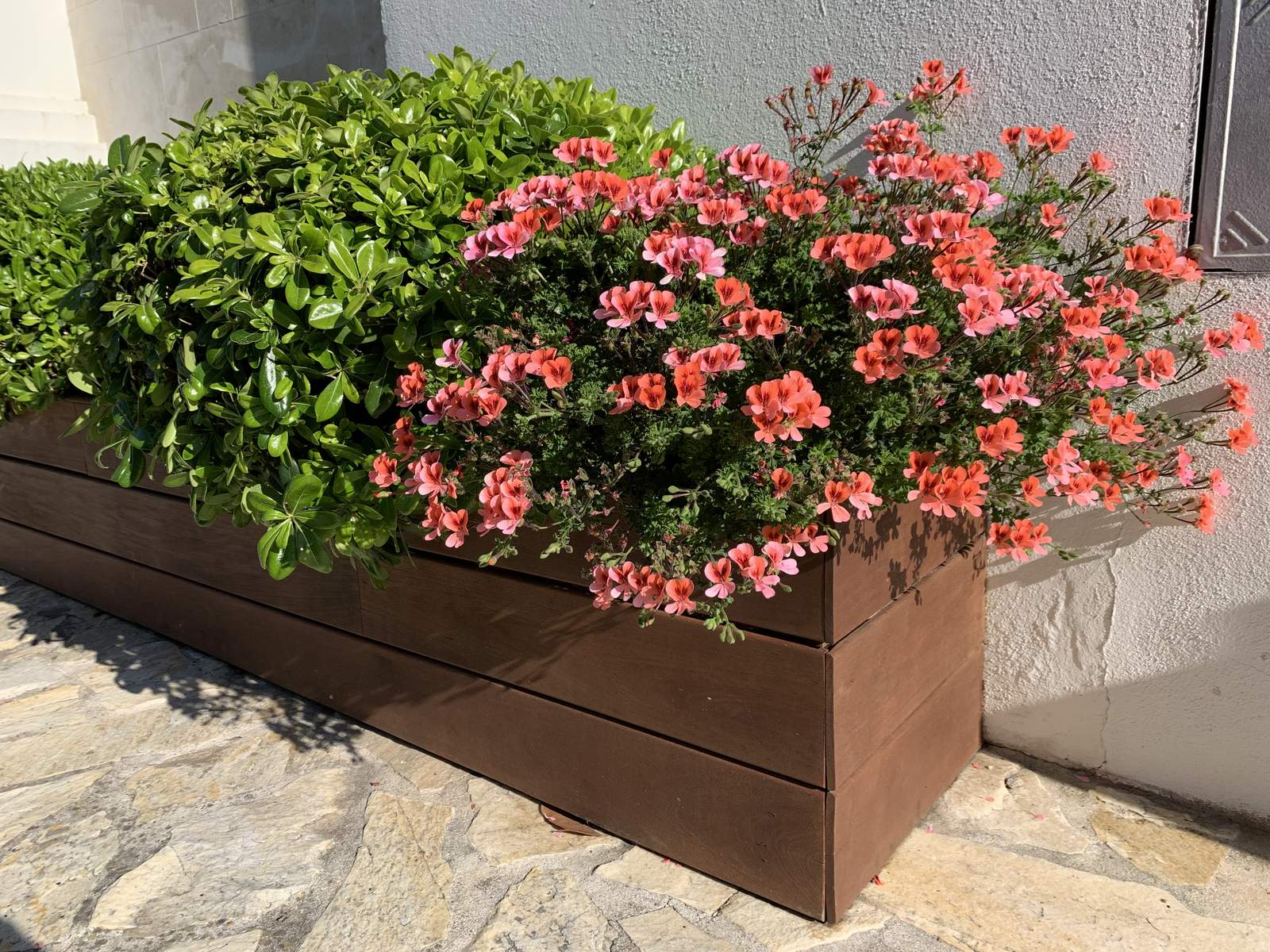
Small garden design in Marbella is a different discipline from planning a large villa garden. On a patio, a townhouse plot, a front garden of a few square metres or a roof terrace, every plant, step and light has to earn its place, because there is no room to hide mistakes. The good news is that a compact garden on the Costa del Sol can feel generous and green all year if it is planned around the climate, the sun and the way you actually use the space. In this article we explain how to make a small garden look bigger, which layout and materials work best, which plants suit tight spaces and hot summers, how to water a small garden without waste, what to check on terraces and in residential communities, and what a small-garden project with a professional team looks like step by step.
What counts as a small garden on the Costa del Sol?
In practice, most of the small gardens we work on in Marbella, Estepona, Mijas and Benahavís fall into a few types: the patio or courtyard of a townhouse, the front garden between the street and the house, the private garden of a ground-floor apartment, the strip of land around a semi-detached villa, and the terrace or roof terrace of a penthouse. Typical sizes range from 15 to 150 m².
What they have in common is not only the size. Small gardens are usually overlooked by neighbours, often partly shaded by walls, sometimes built over a garage or a slab, and almost always visible from the living room. That means the garden is a view as much as a place, and its design has to work from inside the house as well as from the terrace.
The climate adds its own rules. Summers are long, hot and dry, winters are mild, and the hottest weeks coincide with the time when owners use their gardens most. A small garden heats up quickly when it is surrounded by white walls and paving, so shade, plant choice and irrigation matter even more than in a large plot.
How do you make a small garden look bigger?
Garden designers use a handful of reliable techniques to make a compact space feel larger. They work just as well on a Marbella patio as in a city garden in northern Europe:
- One clear idea instead of many. A small garden looks bigger when it has one main material, one dominant colour in the planting and a simple shape. Too many materials, pots and ornaments make it look smaller and cluttered.
- Continue the floor from inside to outside. When the terrace paving matches or echoes the floor of the living room, the eye reads the house and the garden as one space.
- Use the diagonal and hidden corners. A path or a line of paving laid on the diagonal, or a curve that disappears behind a planted bed, suggests that the garden continues further than it does.
- Blur the boundaries. Walls covered with climbers or planted in front with shrubs of different heights stop the eye from finding the edge of the plot.
- Plant in layers. Low plants in front, medium shrubs behind and a small tree or tall grasses at the back create depth even in a bed only one metre wide.
- Fewer, larger elements. One large pot or one multi-stemmed olive tree looks calmer and more expensive than ten small pots.
- Light in the evening. Uplighting a tree or grazing a textured wall makes the garden part of the view at night, when Marbella gardens are used most in summer.
We describe more design ideas for villas of every size, from Mediterranean planting to green walls and hillside gardens, in our article on garden design ideas for villas in Marbella.
Layout first: zones, paths and where the sun falls
Before choosing a single plant, it is worth answering three questions. What will the garden be used for: breakfast in the morning sun, a shaded dining area, a place for children, a plunge pool or simply a green view? Where does the sun fall in July and in January? And what must stay accessible: meters, the pool equipment room, the gas tank, the bins?
In a small space it usually works best to choose one main use and design everything around it. A shaded dining terrace for six people needs roughly 3 × 4 m of level paving. A lounge corner with two chairs needs much less. What remains becomes planting, and the more generous the beds, the greener the garden feels.
Orientation decides a lot on the Costa del Sol. A south- or west-facing patio surrounded by white walls can reach very high temperatures in the afternoon and needs shade: a pergola with a climber, a tree with a light canopy, a sail or a retractable awning. A north-facing courtyard stays cool and suits plants that would burn elsewhere, such as ferns, clivias or hydrangeas in pots.
Levels help too. A step of 15–30 cm between the terrace and a raised bed or a sunken seating area makes a small plot more interesting and provides built-in seating along the wall of the bed. Raised beds also give better soil depth on plots where the ground is full of builders' rubble, which is common in newer developments.
Materials: paving, gravel and walls in a compact garden
Hard landscaping takes up a large share of a small garden, so the choice of materials has a big effect on how it looks and how hot it gets.
- Paving: large-format tiles or natural stone slabs with narrow joints look calmer than small pieces. Light colours reflect heat and glare; mid tones such as warm grey or sand are more comfortable in strong sun. Choose anti-slip finishes around pools and outdoor showers.
- Gravel and stone mulch: gravel paths and gravel beds are inexpensive, let rain soak into the ground and cover the soil, which reduces evaporation. A layer of decorative stone or pine bark around plants is one of the measures recommended in water-saving gardening guides from the Spanish Ministry for the Ecological Transition (CENEAM).
- Artificial grass: it is popular in small gardens because it needs no water, but in full sun it becomes very hot and it does nothing for wildlife or cooling. In a small garden we often suggest a combination: a small area of natural lawn or a ground cover in the shade, and gravel or paving in the hottest spots.
- Walls and boundaries: rendered walls painted in a warm off-white, natural stone or wooden screens. Climbers such as star jasmine, bougainvillea or plumbago soften them quickly.
Which plants are best for small gardens in Marbella?
Plant choice in a small garden is about scale, season of interest and water needs. A tree that will reach 12 m or a palm with a 6 m crown is the wrong choice for a 40 m² patio, however beautiful it looks in the nursery.
Small trees and focal points
- A multi-stemmed or pruned olive tree, which stays compact for many years and gives light shade.
- Citrus trees (lemon, mandarin, kumquat) in the ground or in large pots: evergreen, scented flowers and fruit.
- Crape myrtle (Lagerstroemia), which flowers in summer and has attractive bark in winter.
- Small palms such as Chamaerops humilis, the native dwarf fan palm, instead of large Canary palms.
Shrubs and perennials with a long season
- Rosemary, lavender, santolina, westringia and teucrium, which tolerate heat, need little water and can be clipped into soft shapes.
- Pittosporum tobira 'Nana' and dwarf myrtle for low evergreen structure.
- Agapanthus, gaura, salvias and lantana for a long flowering season.
- Grasses such as Pennisetum or Stipa for movement and a light, natural look.
Climbers and green walls
- Star jasmine (Trachelospermum jasminoides): evergreen, scented, suitable for sun and partial shade.
- Bougainvillea for strong colour on sunny walls, kept in check by regular pruning.
- Plumbago and Solanum jasminoides for long flowering on fences and pergolas.
Group plants by their water needs. Water-saving guides call these hydrozones: plants with low, moderate and high water needs are planted in separate areas, so each group gets the right amount. In a small garden this often means keeping the thirsty plants, such as a small lawn or hydrangeas, in one shaded corner and filling the sunny beds with Mediterranean species.
How to water a small garden without wasting water
A small garden does not automatically use little water. Pots dry out quickly, walls and paving reflect heat, and a few square metres of lawn can consume more water than all the shrubs together. Spanish water-saving guidance notes that lawns are the main water consumer in conventional gardens, and that many established Mediterranean trees and shrubs need only three or four waterings during the summer.
For small gardens on the Costa del Sol we usually recommend:
- Drip irrigation with built-in drippers for beds and individual drippers for pots, on a separate line from any lawn sprinklers.
- A controller with seasonal adjustment, so the system waters more in July and much less, or not at all, after the winter rains.
- Watering early in the morning or late in the evening, when evaporation is lowest.
- A layer of mulch on every bed to keep the soil cool and moist.
- Checking the system each spring: blocked drippers, leaks and lines cut during gardening work.
During drought restrictions this kind of system is often the difference between a garden that survives and one that is lost. We explain the rules and practical steps in our article on garden irrigation and pool care during water restrictions on the Costa del Sol. If your current system is old or was never designed for the planting, a review of your irrigation system is usually the quickest way to save both water and plants.
Terraces, roof gardens and gardens in residential communities
Many small gardens in Marbella belong to apartments and townhouses inside a residential community. Before building planters, a pergola or a water feature, it is worth checking two things.
The first is the structure. Soil, water and large pots are heavy, and a terrace or a garden over an underground garage has a maximum load and a waterproofing layer that must not be damaged. For large planters, a raised bed or a small tree on a terrace, ask an architect or the developer about the permitted load, and use light substrate and proper drainage.
The second is the community. Under Article 7 of the Spanish Horizontal Property Law (Ley 49/1960), an owner may make changes to their own property as long as they do not affect the safety of the building, its structure or its exterior appearance. A pergola visible from the street, a change to the facade or work on common elements usually needs the agreement of the community, and many communities have their own rules about awnings, screens and colours. It is easier to agree this before the work starts than to change it afterwards.
Step by step: a small garden project with MAXIPROF
- Site visit. We look at the space, the sun at different times of day, the soil, drainage, access and existing plants worth keeping, and listen to how you want to use the garden.
- Concept. A simple plan with zones, materials and a planting palette, so you can see the idea before any work starts.
- Detailed design and budget. Final layout, plant list, irrigation, lighting and a clear breakdown of the work.
- Construction. Our own crews handle the groundwork, paving, raised beds, irrigation, electrical work for lighting and planting, without subcontractors.
- Aftercare. The first summer decides whether new plants establish. We adjust the irrigation and, if you wish, take care of the garden on a regular basis.
Our landscape design service in Marbella covers projects of every size, from a single patio to a full villa garden, and regular garden maintenance keeps a small garden looking its best through the seasons. For terraces used in the evening, well-planned outdoor lighting adds a lot with only a few fittings.
Frequently asked questions
Is it worth having a lawn in a small garden? Only if you really use it. A few square metres of lawn need regular mowing, feeding and a lot of water in summer. In many small gardens a ground cover, gravel with Mediterranean planting or a small shaded lawn is more practical.
Can I plant a tree in a small patio? Yes, if you choose the species carefully. An olive tree, a citrus or a crape myrtle stays in scale for many years. Avoid trees with aggressive roots close to walls, pools and drains.
How long does it take to build a small garden? Depending on the paving, irrigation and planting, typically from a few days to a few weeks. The design stage usually takes longer than the construction itself.
When is the best time to plant? Autumn and early spring. Plants put in from October to March have time to root before the summer heat.
MAXIPROF designs, builds and maintains gardens of every size in Marbella, Benahavís, Estepona and Mijas with its own teams: more than 125 projects, 178,000 plants and 13,000 m² of lawn installed. If you have a patio, terrace or small garden that could work harder for you, request a free site visit or send us a message on WhatsApp at +34 662 629 540.