How much does a garden renovation cost in Marbella? It is the first question almost every villa owner asks, and the honest answer is that there is no single price per square metre: two gardens of the same size can differ several times in cost depending on the slope, the access, the materials, the size of the plants and the infrastructure hidden underground. In this article we explain what a garden renovation includes, which factors affect the price most, which costs are often forgotten, how to read a quote and how to keep the budget under control — so that you can compare offers and plan your project with confidence.
Why there is no single price per square metre
A garden renovation is a combination of very different kinds of work: earthworks, drainage, walls and paving, irrigation, lighting, soil preparation and planting. In one garden the main cost is a new retaining wall on a slope; in another it is a large specimen olive tree that has to be lifted in by crane; in a third it is simply replacing an old lawn and modernising the irrigation.
That is why a price "per square metre" found online says very little about your garden. A reliable budget is only possible after a site visit, when the slope, the soil, the access for machinery, the existing plants and installations, and your wishes for the garden have been seen and measured.
What a garden renovation usually includes
Depending on the project, a renovation can include some or all of these stages:
- Design: layout, planting plan, materials, irrigation and lighting plan.
- Clearing and demolition: removing old lawn, dead plants, roots, old paving or structures, and taking away the waste.
- Earthworks and levelling: shaping the ground, creating terraces, bringing in or removing soil.
- Drainage: drains and channels so that autumn rain does not flood terraces or wash away slopes.
- Hard landscaping: paths, steps, walls, paving, edging, pergolas and gravel areas.
- Irrigation and lighting: pipes, drip lines, sprinklers, controllers, cables and light points, installed before planting.
- Soil improvement: compost, topsoil or amendments, depending on the existing soil.
- Planting and lawn: trees, palms, shrubs, groundcovers and lawn.
- Finishing: mulch or gravel, final clean-up and setting up the irrigation programme.
The factors that affect the price most
Size and condition of the garden
Size matters, but condition often matters more. A garden with deep roots, rubble from construction, or an old lawn full of weeds needs more preparation than a clean plot. Removing old structures and taking waste to an authorised site also adds to the cost.
Slope and access
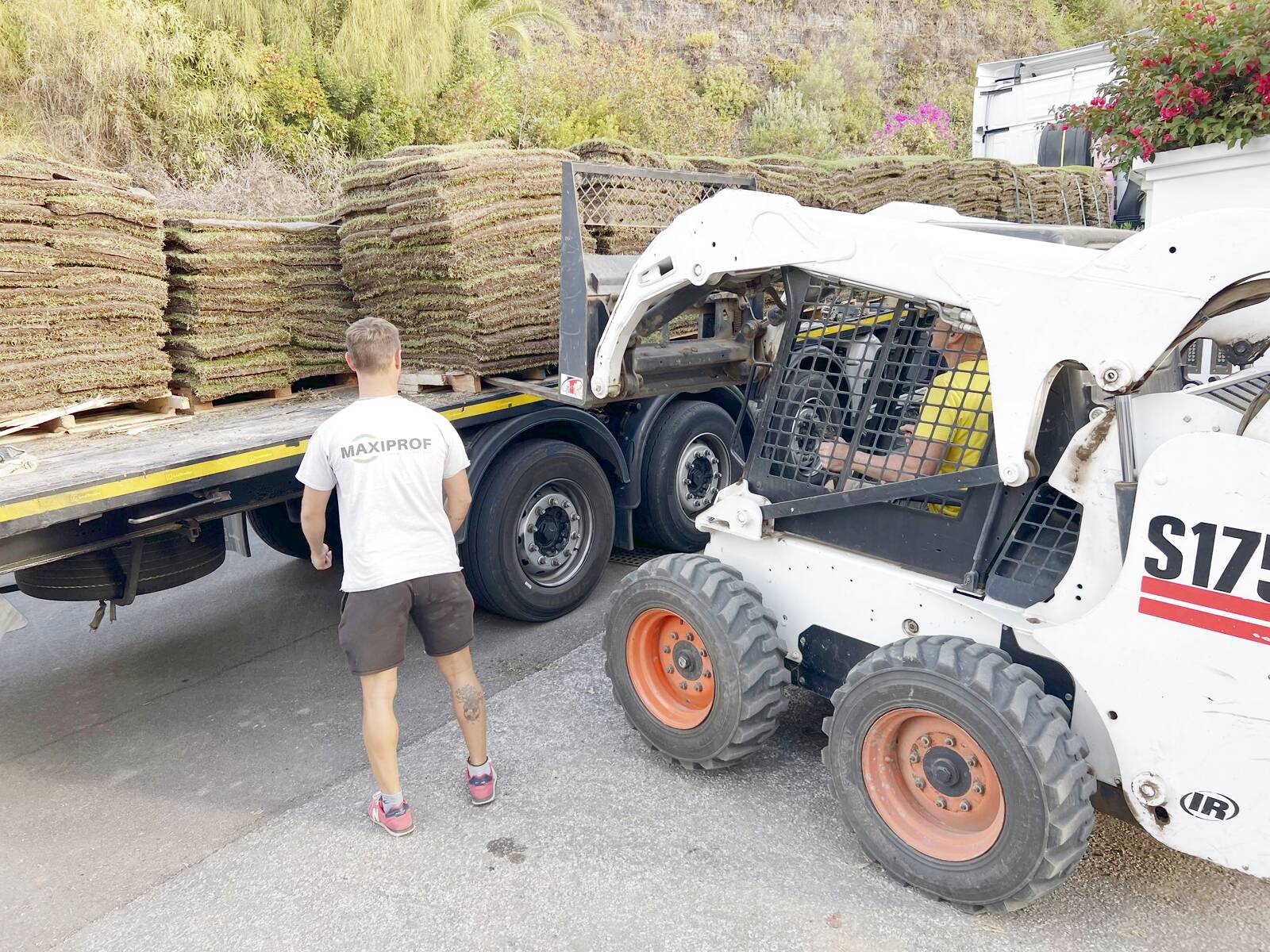
Many villas in Marbella, Benahavís and Estepona are on steep plots. Slopes need retaining walls or terraces and drainage, and difficult access means that machinery cannot reach every corner: when soil, stone and plants have to be moved by hand, labour time increases considerably. Access for a lorry, a mini-excavator or a compact loader is one of the first things we check on a site visit.
Hard landscaping versus planting
Walls, paving and steps are usually the most expensive part per square metre, because they require materials, foundations and skilled labour. A garden with large paved terraces and natural stone walls costs more than one where most of the surface is planting and gravel.
Size of the plants
Plant size has a huge effect on price. The same species can be bought as a young plant in a small container or as a mature specimen several metres tall. Mature olive trees, palms or large shrubs give an instant result but cost much more and may need machinery or a crane to plant. A mix — a few specimen trees for structure and younger plants for the rest — often gives the best balance.
Lawn type
Natural turf, a seeded lawn and artificial grass have very different costs, both to install and to maintain. We explain the options in the next section.
Irrigation, lighting and drainage
These installations are invisible once the garden is finished, but they decide how well it works. A modern irrigation system with drip lines, zones and a smart controller costs more than a few hoses, but saves water and plants for years. See our irrigation systems and outdoor lighting services.
Materials
Local stone, imported natural stone, porcelain paving, timber decking or composite all have different prices and lifespans. Materials should be chosen for how they age in the sun and the salt air, not only for how they look on the first day.
Lawn options: natural turf, seed or artificial grass
- Natural turf (rolled lawn) gives an instant green lawn and can be used within a few weeks. It costs more than seed to install, and it needs regular irrigation and care. Autumn is the best season to lay it, as we explain in Autumn Planting and Lawn Renovation on the Costa del Sol.
- Seeded lawn is cheaper to install but takes time to establish and must be sown in the right season.
- Artificial grass has a high initial cost and no irrigation, but it gets very hot in summer sun, does not cool the garden, and still needs cleaning and occasional replacement.
Lawn is also the part of the garden that uses the most water. Spanish water-saving guides, such as the one by the National Centre for Environmental Education (CENEAM), recommend limiting lawn to the areas that are really used and replacing the rest with groundcovers, shrubs and mulch. In many renovations, reducing the lawn area lowers both the installation budget and future water bills.
Costs that are often forgotten
- Waste removal: old lawn, roots, rubble and soil must be taken to an authorised site.
- Soil: poor or compacted soil may need improvement or replacement before planting.
- Upgrading existing installations: old irrigation pipes or electrical lines may not be worth keeping.
- Permits: new walls, structures or major changes to the plot may require a licence or a declaración responsable from the town hall under Andalusia's land-use law (Law 7/2021, LISTA). Planting a lawn or flower beds does not, but it is always worth checking with the municipality before building.
- Boundaries: under Article 591 of the Spanish Civil Code, unless local rules or custom say otherwise, tall trees should be planted at least 2 metres from the boundary and shrubs or small trees at least 50 centimetres. Planning this from the start avoids having to move trees later.
- VAT: in Spain, garden works are generally invoiced with the standard VAT rate of 21%. Check whether a quote includes VAT or not.
- Care in the first year: new planting needs close attention until it establishes; it is worth including in the plan.
How to read a garden renovation quote
When you compare offers, a lower total is not always the cheaper option. A good quote should show:
- each stage of the work, with quantities and units (m², metres, number of plants);
- plant species and sizes (container volume or height), not just "plants";
- the specification of irrigation and lighting: type of pipes, drip lines, controller, light fittings;
- whether waste removal, soil and materials are included;
- the timeline and payment stages;
- what happens if a new plant fails in the first weeks;
- whether VAT is included.
Two quotes with the same total can describe very different gardens. If one offer is much cheaper, check plant sizes, irrigation quality and whether drainage and waste removal are included.
How to keep the budget under control
- Work in stages. Build the structure and infrastructure first — levels, walls, drainage, irrigation, lighting — and add planting and decorative details in later stages.
- Keep what is good. Healthy mature trees and palms are valuable; they can often stay in place or be transplanted within the garden.
- Choose plant sizes wisely. In the Costa del Sol climate, many shrubs and climbers grow quickly; specimen sizes are worth it only where an instant effect really matters.
- Design for less water. A Mediterranean planting plan with less lawn reduces future water and maintenance costs. We share design ideas in Garden Design Ideas for Villas in Marbella.
- Do not save on what is hidden. Cheap irrigation and missing drainage are the most expensive mistakes to fix later, because the garden has to be opened up again.
How we prepare a quote, step by step
- Site visit. We walk the garden with you, measure it, check the slope, soil, access and existing installations, and discuss your wishes and budget.
- Proposal. We prepare a layout and a list of works, with options where they make sense — for example, different plant sizes or lawn types.
- Detailed quote. Each stage is itemised with quantities, materials and plant sizes, so you can see exactly what you are paying for.
- Planning. We agree the stages and dates, taking into account the best planting season.
- Execution. Our own team carries out all the work, from earthworks to the last plant.
- Aftercare. We can continue with regular garden maintenance, so the new garden is looked after by the people who built it.
Frequently asked questions
How much does it cost to renovate a garden in Marbella? It depends on size, slope, access, materials, plant sizes and installations. After a free site visit we prepare an itemised quote for your garden.
Can I renovate my garden in stages? Yes, and it is often the best way to manage the budget: infrastructure first, then planting and details.
Is artificial grass cheaper than natural lawn? It costs more to install and saves irrigation, but it gets very hot in summer and does not cool the garden. Often the best option is a smaller natural lawn combined with drought-tolerant planting.
When is the best time to renovate a garden? Hard landscaping can be done all year, but planting is best done in autumn, so plants root before the summer heat.
Do I need a permit to renovate my garden? Planting and lawn do not, but new walls, structures or major changes to the plot may need a licence or a declaración responsable from the town hall.
MAXIPROF has designed, built and maintained gardens on the Costa del Sol since 2010 with its own teams and no subcontractors. We give itemised quotes after a site visit, explain the options at each stage, and build the garden we quote — no hidden extras.
We renovate villa gardens in Marbella, Benahavís, Estepona and Mijas. Learn more about our landscape design and construction service and what determines the cost of regular garden and pool maintenance, or request a free site visit — you can also write to us on WhatsApp at +34 662 629 540.
Sources
- BOE — Spanish Civil Code (Article 591)
- BOE — Andalusian Law 7/2021 on the sustainability of the territory (LISTA)
- BOE — Law 37/1992 on Value Added Tax
- CENEAM, Ministry for the Ecological Transition — Jardinería con menos agua (Gardening with less water)